

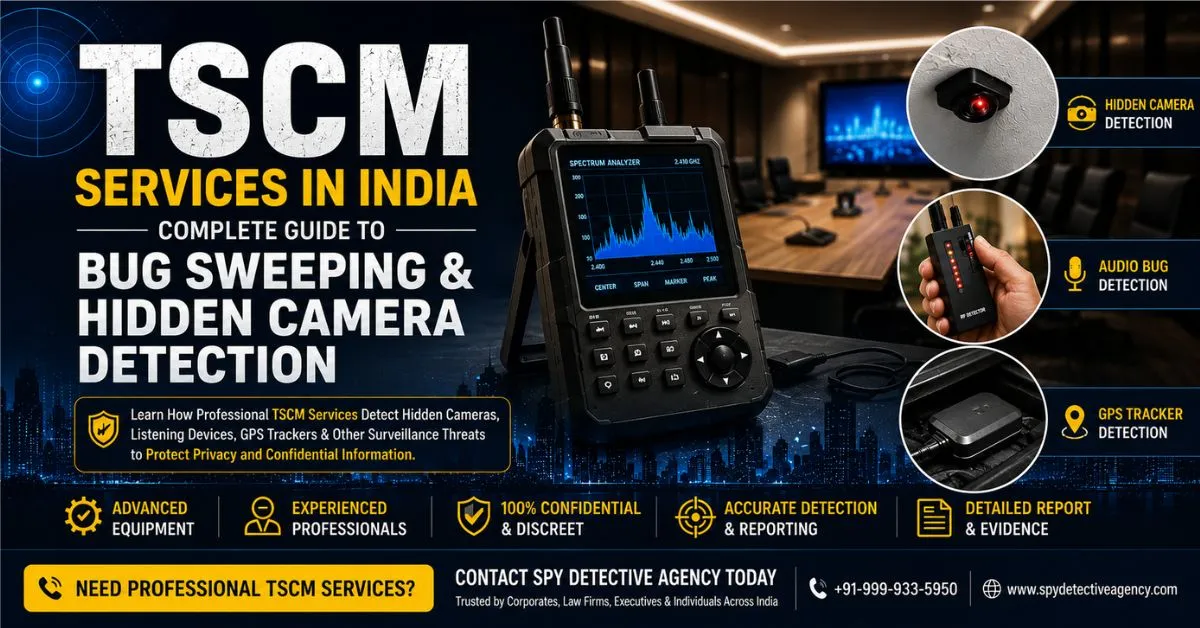

With the evolution of the world into a more interconnected one, information protection is becoming increasingly important for businesses, professionals and individuals. Modern technological advances make it easy to access sophisticated surveillance technologies such as hidden cameras, listening devices, GPS tracking devices and many others, which pose great danger from the points of view of privacy and security. No matter if it is a confidential business discussion, legal matter, communication between executives or private life of individuals, unauthorised surveillance leads to information leakages, financial damages, reputation loss and many more dangers.
Technical Surveillance Counter-measures, often referred to as Bug Sweeping and Surveillance Detection, represent a special category of investigation services aimed at the identification and elimination of surveillance threats. Using sophisticated equipment for electronic detection, inspection and technical analysis, a professional TSCM inspection service helps to detect any hidden recording device, hidden camera, GPS tracking device, wireless transmitter and other types of surveillance.
This complete guide will cover all aspects of TSCM services in India and explain how bug sweeping works, potential surveillance threats, the hidden camera detection process, GPS tracking device detection, dangers of corporate espionage, legal issues related to TSCM and situations when TSCM inspection should be performed by a professional investigator.
What is TSCM?
TSCM stands for countermeasures against technical surveillance. It refers to a systematic process of identifying and countering electronic eavesdropping, spying, or leakage of information.
Some of the common technical surveillance measures are:
- Hidden cameras (wired, wireless, IP, micro SD)
- Audio bugs (RF, GSM/4G, hardwired, voice-activated recorders)
- Bluetooth/Wi‑Fi beacons and rogue access points
- GPS trackers in vehicles
- Vulnerable conferencing setups (mics, UC devices)
- Acoustic/optical/EM leaks and policy/process gaps
Why does TSCM matter in India?
There is no dearth of surveillance-friendly locations in India – offices with a lot of people, co-working, boardrooms, hotels, tenancy, manufacturing plants, schools, exam centers, and hospitals. There have been instances of corporate espionage, stalking, covert photography, and security violations from within. Traditional telecom lines and cabling are also at risk. This danger is particularly pronounced for executives, legal, PE, VC, and startup employees, celebrities, and R&D sites with substantial IP assets.
When to Consider a Bug Sweep
- Sensitive meetings, M&A, board reviews, investor pitches, high-stakes negotiations
- Unexplained leaks or rumors matching confidential topics
- New or shared spaces: hotels, rented villas, co-working rooms
- After staff exits or disputes
- Strange device behavior: interference, unknown SSIDs/Bluetooth names, unusual data usage
- Vehicle route leaks or stalking concerns
How Professional Bug Sweeping Works?
Typical Indian TSCM companies usually follow a tiered methodology:
- Pre-sweep intelligence: Threat model, areas of concern, incidents, floor plans, network maps.
- RF spectrum scanning: Wideband RF spectrum scans (typically 10 kHz to 6/8/24 GHz based on equipment) in order to identify transmitters (analog/digital, frequency hopping).
- Non-Linear Junction Detector (NLJD): Identifies semiconductor junctions (even those which are turned off); ideal for detection of covert electronics placed in walls/fixtures/furniture.
- Visual and Physical surveying: Optics lens searches, borescope examination, infrared or thermal testing, tamper signs, fixture disassembly (wherever allowed).
- Network and Bluetooth/Wi-Fi discovery: Rogue Access Points, IP Cameras, Miracast, Bluetooth Low Energy Beacons, SSID camouflage or hidden networks, Vendor OUI discrepancies. Limited to your networks.
- Telephony and wiring assessment: Line integrity testing, VoIP endpoints, meeting room acoustics, cable tracing and testing.
- Acoustic and leakage management: Noise masking testing, microphone null testing, speech privacy test; occasionally TEMPEST-type test.
- Vehicle testing (if required): RF scan, NLJD, vehicle underbody/engine bay inspection, OBD-II, battery/relay hiding, trackers.
- Reporting & Remediation: Documentation through photography, spectrum scans, removal of devices (as authorized), risk assessment and policy change.
- Follow-up testing: Post-remediation validation, periodic sweeps, training.
Core tools professionals use
- RF spectrum analyzers and receivers (find active transmitters and burst/hopping signals)
- NLJD (detects electronic components even when not transmitting)
- Optical lens detectors and laser/IR illuminators (find tiny camera lenses)
- Thermal/IR imagers (spot heat signatures)
- Time-domain reflectometers (wiring integrity)
- Phone line analyzers and cable tracers
- Bluetooth/Wi‑Fi scanners and protocol analyzers
- Borescopes/fiberscopes for concealed spaces
- White-noise/speech privacy generators for conference rooms
Note: Many spy devices don’t continuously transmit; some store locally on micro SD. That’s why visual/NLJD and physical inspections matter as much as RF scans.
DIY vs. Professional TSCM: what’s realistic?
DIY checks you can safely try (on property you control)
- Visual scan: Examine smoke detectors, wall clocks, air purifiers, charging devices, lamps, television set-top box, and mirrors. Use a torch at an oblique angle to see any reflection from lenses.
- Network scan: Using your Wi-Fi network, check for any foreign device from the administrator page of your router. Some optional tools can be used for enumeration of devices; however, do not perform scanning on other people’s networks.
- Bluetooth scan: Scan through your phone’s Bluetooth settings to detect any suspicious name that keeps appearing on the same device.
- Disable all unused smart devices while making important calls (turn off microphones, disconnect voice assistants, smart televisions).
- Basic RF scanner: Will detect continuous transmitters but not modern or burst transmitters.
When to seek professional assistance
- Important corporate meetings, boardrooms
- Possible stalkers or illegal recording
- Recurring leaks without a clear source
- Vehicle tracking concerns
- High-risk venues: hotels, short-term rentals, green rooms
- After move-ins or contractor work in critical areas
How to choose a TSCM provider in India (checklist)
- Credentials and training
- Training on RF/NLJD; hands-on lab certifications from established labs
- Knowledge of Indian environments (mixed cabling, heavy RF environments, multi-tenant environments)
- Scope of work and reporting: Scope of Work document in writing form, Chain-of-Custody document, photographic evidence, spectrum evidence, remediation plan
- Technology: Modern wideband spectrum analyzer equipment, NLJD, Optical/Thermal Equipment, Protocol Analyzers
- Discretion and compliance: NDAs, light on-site footprint, proper data management, security clearance of technician
- Liability insurance and client testimonies: Liability Insurance Coverage; Client testimonials verified (non-confidential)
- Services provided: Services available pan India (Mumbai, Delhi NCR, Bengaluru, Hyderabad, Chennai, Pune, Kolkata, Ahmedabad); Emergency Services Availability
- Follow-up post-sweep services: Validation Sweeps; Policy templates; Staff training on policies
Costs and time involved in India (estimated ranges)
- Residential Sweep: Estimated ₹15,000-75,000 and above based on geographical location and degree of difficulty and type of technology used
- Hotel Room /VIP room: Approx ₹10,000 to ₹40,000 per room (volume discounts available)
- Small Office / Board room: Estimated ₹35,000-1,20,000 and above based on complexity of the environment and technology used
- Medium / Large office floors / Campus: Day rates ranging between ₹50,000-₹2,00,000 and above per team per day
- Vehicle GPS tracker detection: Estimated ₹8,000-₹35,000 per vehicle
Time taken to turn around: Varies from 2 to 8 hours for small areas and greater than 1 day for large areas.
If you are evaluating investigation or surveillance-related services, you may also find our Complete Guide to Detective Agency Costs in India helpful. The guide explains the factors that influence investigation pricing, common service charges, and how to choose a professional investigation agency based on your specific requirements.
Legal Problems in India (legal advice not intended)
- Unlawful Surveillance: Installation of hidden camera or listening device without authorization is punishable under:
- Section 354C IPC (voyeurism)
- Information Technology Act 2000
- Telegraph Act provisions and state police acts
- DPDP Act 2023 (personal data without lawful basis/consent)
- Legal Aspects of TSCM: The persons who own, rent, or have managerial authority over the property can sweep such places. When you detect any device, make sure to preserve the evidence and think about contacting local police/cyber cell before removal.
- Workplace / Employment: Ensure there are proper policies related to devices in meeting rooms and regarding prohibition of recording.
Hidden camera detection specifics
- Common hideouts: smoke/CO detectors, alarm clocks, phone chargers, power strips, wall adapters, bulbs, picture frames, AC vents, teddy bears, mirrors, bathroom hooks.
- Lens tests: Flashlight scan, camera test with front camera against reflective suspects, IR “sparkle” check in low light.
- IP cameras: Check for unknown SSIDs, strange ports on switches/routers, PoE injectors, and strange MAC OUIs.
- Local-only recorders: If there’s nothing on the RF spectrum, keep an eye out for micro SD slots and strange power paths.
Vehicle GPS tracker detection (India)
- Telltale signs: Rapid battery drainage, unusual wires near battery, OBD-II dongles that you haven’t put there, and magnets under car body.
- Tests to perform: Visual test (car underside, wheel wells, bumpers), RF test in secluded place, NLJD for hidden trackers, OBD-II test for stealthy dongles.
- Safety measures: Be careful driving the car and have professionals handle lifts and removal of hidden tracking devices.
Meeting room and office protections
- Pre-meeting protocol: 10-15 minutes test for lenses, strange power adaptors, unknown Bluetooth/Wi-Fi devices, and tapes over webcams when they’re not necessary.
- Audio chain hardening: Mute unnecessary ceiling microphones, keep control of the firmware of the conference system, separate “bring your own” dongles, and use white noise.
- Protocol: There should be no personal chargers and IoT devices in a sensitive room; sign device list for contractors/vendors.
If you find a suspicious device
- Do not power it off or dismantle immediately
- Do not announce discovery over nearby phones or smart assistants
- Take photos on location (both wide shots & close-ups); record the time & location
- Make sure to isolate the location; if danger to life is present, contact the appropriate authorities
- Consult an expert in TSCM; in case of criminal activity, inform the local police/cyber cell
Myths & facts
- “An RF detector is enough” → Many devices store locally or transmit intermittently. Layered methods are essential.
- “Cameras must be on Wi‑Fi” → Many records to SD or use 4G/LTE. Some piggyback on existing wiring.
- “Mirrors always reveal cameras with the fingernail test” → Not reliable. Use proper optical/IR and physical checks.
- “I’ll see a hidden device on Bluetooth” → BLE names can be spoofed or hidden; not all devices broadcast clearly.
Indian Industries and Examples of Their Applications
- Corporate: Research and Development facilities, Corporate Headquarters, Boardrooms, and Coworking Spaces
- Hospitality: Villas, Hotels, and Event Spaces
- Retail/Fitting rooms: Compliance and Privacy Protection
- Education/Exams: Preventing cheating and recording
- Media/Celebrity: Vanity Vans, Travel Suites, and Green Rooms
- Legal/Healthcare: Client/Healthcare Privacy
- Residential/High Net Worth: Private Residences, Vehicles, and Domestic Worker Spaces
Hygiene Maintenance and Protection
- Schedule regular inspections: once or twice per year for ordinary hygiene protection and quarterly for risk-prone situations.
- Maintain the network using WPA3, deactivate WPS, isolate IoT appliances, and search for rogue APs.
- Physical access control using key management, tampering prevention, and contractors’ access control measures.
- Limiting “attack surface” through removal of excess USB charging points from sensitive locations.
- Employees need to be educated on identifying malicious devices, reporting them instantly, and not using smart devices in important places.
A Simple Checklist
- Define rooms/vehicles to sweep
- Kill non-essential RF, then baseline scan
- Visual + optical lens check of fixtures/chargers/clocks
- NLJD and thermal on suspicious areas
- Network/Bluetooth discovery on owned systems
- Cable/phone line integrity tests where applicable
- Document findings; preserve chain-of-custody
- Remediate, re-test, and schedule next sweep
FAQ: TSCM, bug sweeps, and hidden camera detection in India
1. What is TSCM?
TSCM is the professional process of detecting and mitigating electronic surveillance threats like hidden cameras, audio bugs, and trackers.
2. Are bug sweeping services legal in India?
Yes, on property you own/manage or when you have proper authorization. Planting surveillance devices without consent can be illegal.
3. How much does a bug sweep cost in India?
From ~₹10,000 for simple spaces to ₹2,00,000+ per day for complex corporate sites. Get a written scope/quote.
4. Can my phone detect hidden cameras?
Sometimes you may spot suspicious Bluetooth/Wi‑Fi devices or lens reflections, but phones can’t replace professional tools like RF analyzers and NLJD.
5. Can hidden cameras work without Wi-Fi?
Yes. Many hidden cameras can record footage directly to internal memory cards without requiring an internet connection, making them difficult to identify without professional inspection.
6. How long does a sweep take?
Small rooms: 2–3 hours; large offices: 1–3+ days depending on area and complexity.
7. What should I do if I find a device?
Don’t touch it. Photograph, isolate, and contact a TSCM professional and/or local police/cyber cell.
8. Will a sweep disrupt my business?
Professionals plan after-hours or low-impact windows. Some tests may require brief device/network pauses.
9. How often should I schedule TSCM?
Quarterly for high-risk teams/rooms; semi-annual or annual for general spaces; before/after critical events.
10. Can TSCM find GPS trackers in cars?
Yes. Vehicle sweeps include visual inspection, RF/NLJD checks, and OBD-II assessments.
11. Is it safe to use cheap RF detectors from online marketplaces?
They can help with basic, continuous transmitters but often miss modern devices. Treat them as supplementary, not sufficient.
12. Will a sweep guarantee 100% detection?
No honest provider will claim 100%. Layered methods dramatically reduce risk and catch most practical threats.
Conclusion
With advancements in surveillance technology, the necessity for protection of sensitive data cannot be ignored by any business or professional person due to possible use of hidden cameras, listening devices, GPS tracker and other covert surveillance gadgets. Detection of such threats may require technical expertise as well as some special equipment and procedures like Technical Surveillance Counter-Measures (TSCM).
Services for TSCM assessment, bug sweeps and hidden camera detection can help in finding out security threats before any breach of confidence, financial or any other loss occurs. It is essential irrespective of whether your need is related to corporate espionage, workplace privacy, executive protection, hotel room surveillance, vehicle tracking or safeguarding any other confidential matters.
If you have concerns about any form of surveillance activity being carried out on you or wish to safeguard yourself from any such threat then getting professional assistance from TSCM experts is recommended. Our experts at Spy Detective Agency use special equipment for detection of any such threat along with technical and investigative skills.
Need Professional TSCM Services in India?
In case there is any possibility of any unauthorised surveillance or if you wish to make sure that your residence, office, boardroom, hotel, vehicle or business premises are secured, then contacting experts on TSCM would be an appropriate course of action. Here at Spy Detective Agency, one of the best Detective Agencies in Noida, we use highly advanced tools and technologies to help uncover any threat to your privacy, all within strict confidentiality.
At Spy Detective Agency, you can get confidential assistance with bug sweeps, hidden cameras, GPS trackers and various other TSCM services. Our team of experts works hard to help businesses, lawyers, individuals and organizations across Noida, Delhi-NCR and India protect their private information and keep their peace of mind intact.