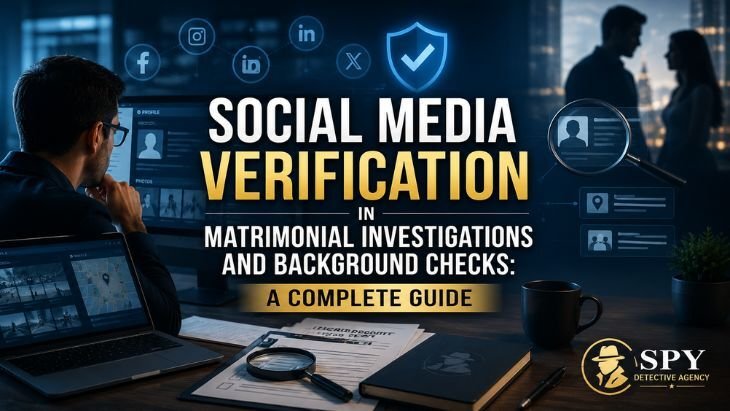

Nowadays, social media has become a very common aspect in everyone’s life, which influences building relationships and assessing opportunities and individuals. Social media accounts like Instagram, Facebook, LinkedIn, X, and matrimonial websites become the means of forming the first impression about the lifestyle, professional experience, hobbies, and relationships of people. In India, where matrimonial alliances, online dating, business cooperation and partnerships and professional networking become more common practices, profiles in social networks play an important role in the establishment of trust.
But everything which can be found online is not always true. The users of social networks can lie, exaggerating their successes, hiding relationships and personal information, creating fictional online characters and committing online fraud scams. Thus, making any important decisions based only on the data from the Internet profile may become rather risky.
This is where social media verification proves its worthiness. Using the data available in the Internet and comparing it, one can perform matrimonial investigation, background check, online identity verification and fraud prevention. It becomes more popular among users living in big cities like Delhi, Noida, Gurgaon, Mumbai, and elsewhere in India.
This guide highlights the role of social profile verification in matrimonial investigation and background checks, the red flags that should be noted, and the methods used by professional investigators in verifying information through legal means in the digital age.
What Is Social Media Verification?
Social media verification is the process of reviewing and validating information from social platforms (and connected online footprints) to confirm a person’s identity, authenticity, and consistency of claims—such as name, age, job, location, education, relationship status, lifestyle, and reputation.
The goal isn’t gossip. The goal is risk reduction—spotting inconsistencies early and protecting yourself from deception, fraud, or unsafe situations.
Personal vs Professional Verification
Personal verification deals with relationships and marriage issues: identity, marital status, behavioral traits, concealed relationships, and lifestyle consistency.
Professional verification involves issues of employment and credibility: employment claims, business affiliations, reputation, conflict of interest, and possible indicators of impropriety.
Typical Reasons for Verification of Social Media Profiles
- Encountering a person through matrimonial/online dating application sites
- Misgivings about marriage status (being separated or divorced without divulging the fact)
- Inconsistencies in information about employment, income, or education
- Skepticism related to having more than one relationship or a secret social circle
- Fear of aggression, alcohol/drug abuse, and harassment
- Due diligence of the corporation on partner/vendor/individuals
Benefits of Social Media Verification
Social media verification can prove to be beneficial in terms of gaining insight during critical decision-making. Although it can never be considered a substitute for comprehensive background checks, it can help to identify discrepancies and risks at an early stage.
Some of the most significant benefits can be stated as follows:
- Verification of the identity and authenticity of the profile
- Identification of fake profiles and misinformation
- Discovery of any undeclared relations or conflicting relation claims
- Helpful for conducting matrimonial checks and verifying the partner
- Useful for conducting background checks for employment or professional purposes
- Prevention of romance scams and identity theft
- Gaining additional information prior to making business deals or investment
With other forms of verification as well, social media verification can allow people and businesses to take better and more informed decisions.
Why Social Media Verification Matters Before Marriage
Identity and Personal Information Verification
Biodata and conversations are often used by families before engagement or marriage. Social media verification can help you confirm:
- Using real name vs alias
- Location consistency (city, country, frequent travel claims)
- Consistency of age and timeline (graduation year, early career history)
Verifying Relationship Status Claims
Non-disclosure gives rise to many of the risks in matrimonial cases:
- Still married .
- Relationship Status: Unknown (Ongoing)
- Several simultaneous relationships
- “Separated” claims, no clarification, no evidence
Relationship signs can sometimes be found on social profiles through tags, comments, old photos, friend networks, or consistent interaction with one person.
Lifestyle and Behaviour Assessment
At meetings, people can be showing a “perfect” image, while their online behaviour is quite different. Verification can detect:
- Use of aggressive or threatening language in posts
- Substance use indicators (if applicable and not decontextualised)
- Reports of harassment or inappropriate messaging patterns
Consistent gambling, risky behaviour or extremist content (If Applicable)
Employment/Education Verification
Job designation, company name, salary etc. information on employment is often a matter of concern. The social media verification process may help to verify the following:
- Current employer and role continuity
- Probable career timeline
- Relevance of professional network (industry peers vs. random / fake profiles)
- Education claims vs alumni indicators and timeline
Social Media Verification in Matrimonial Investigations
Social media verification is often used as part of a wider pre-marital investigation and post-marital investigation. Used with background verification, surveillance and factual enquiries it can help to provide a more complete understanding of an individual’s personal, professional and relationship history before making important decisions.
Pre-Marital Testing
The pre-matrimonial investigations are designed to verify claims before engagement/marriage thereby reducing the risk of:
- Fake identity and family history
- Secret relationships/secret marriage
- Misrepresented career / financial standing
- Dangerous behaviour patterns
Social media verification is often used with other checks like residential, employment, and references for a complete picture.
Investigations Following Marriage
Social media verification can help support claims in cases involving:
- Adultery or suspected secret relationships
- Financial fraud
- Signs of abusive behaviour or double life, Patterns of harassment
- Disputes in which digital behaviour becomes relevant evidence (handled carefully and legally)
Verification of the relationship and risk evaluation
Things like: Is the person’s relationship narrative consistent across:
- Platforms (Instagram, Facebook, LinkedIn, X etc.)
- Time (old posts vs. recent comments)
- Interaction (close not disclosed relation to somebody)
This is not about judging someone’s past, but about being honest and open about it.
Finding Misleading Information
Finding contradictions between what a person claims and what is published about them online is an important aspect of verification. One inconsistency doesn’t mean deception, but several inconsistencies may require additional verification.
Some common examples are:
- Claim “worked abroad” but no professional footprint to support it
- “Single” claim but couple style posts/repeated interactions
- Claim of “high-profile job” but no credible career timeline or professional network
- Academic credentials inconsistent with the information available in the public domain
- Lifestyle claims that appear inconsistent across different channels
For example:
A person could say that he works abroad, but his social networking account will tell you a different story as he is seen at local events and interacts with people from a particular city and posts from there. Likewise, a single individual can be indulged in activities online that indicate an affair. It does not mean anything wrong, but it certainly shows where more information needs to be verified.
What Investigators Commonly Discover During Social Media Verification
Social media verification is not a process of drawing hasty conclusions from a single post on social media, but rather of identifying trends and contradictions that help in piecing together the facts.
The following is a list of some of the inconsistencies found through social media verification between someone’s public identity on the internet and their identity during matrimonial negotiations, background checks, or business transactions:
- Secret relationships that contradict the claim of being single.
- The employment information is inconsistent (job title, employer or place of work)
- Various online identities that have different personal or professional details.
- False statements about financial information, trips, business ownership, or social status (lifestyle claims)
- Accounts that exhibit minimal activity and interaction, particularly if they seem questionable or have been recently set up.
Lack of digital footprint when there is no information available to verify significant claims in either a personal or professional context.
Significance of the findings
In isolation, these findings may not indicate deception. However, if you see contradictions in several platforms, further verification may be necessary. Social media verification, along with background checks, employment verification and matrimonial investigations help in providing a clearer and more reliable picture before important personal or professional decisions are taken.
Quick Social Media Verification Checklist
Before making a matrimonial commitment, consider verifying:
- ✓ Full name consistency across platforms
- ✓ Employment information
- ✓ Educational background
- ✓ Relationship status claims
- ✓ Location history
- ✓ Professional networking profiles
- ✓ Signs of fake or recently created accounts
- ✓ Consistency between biodata and online activity
- ✓ Presence of undisclosed relationships
- ✓ Public reputation and behavioural indicators
Common Signs of Fake Social Media Profiles
Recently Created Accounts
- A brand-new account with “too polished” details can be a red flag—especially if:
- The person claims long-term usage
- There’s little history, few posts, or sudden mass following
Limited Personal Content
Fake or throwaway accounts often show:
- Very few real-life photos
- No family/friends interaction
- Generic captions and low engagement
Inconsistent Information Across Platforms
Watch for differences in:
- Name spelling, age, location
- Job title/company
- Education history
- Language style and tone
Consistency across platforms is not proof of truth—but inconsistency is a strong warning sign.
AI-Generated or Stolen Profile Photos
Common indicators include:
- Overly perfect face texture, odd lighting, unnatural background blur
- Reversed text/logos in images
- The same photo appearing on multiple unrelated accounts (reverse-image checking can help)
Suspicious Friend and Follower Activity
Look for:
- Followers from unrelated geographies with no common links
- A follower base that looks purchased (low-quality profiles, bot-like names)
- Engagement pods (repetitive comments like “Nice pic” from random accounts)
Hidden Relationships and Misleading Online Identities
Multiple Online Personas
Some individuals maintain separate accounts to compartmentalize:
- One “family-friendly” identity for matrimonial discussions
- Another for dating, parties, or secret relationships
Undisclosed Relationships
Possible indicators (not definitive proof) include:
- Repeated interaction with one person across months/years
- Old tagged couple photos later deleted
- Comments from friends hinting at a relationship
- Travel photos that align with another person’s posts
Misrepresentation of Lifestyle or Occupation
People may exaggerate:
- Income level, luxury lifestyle, frequent international travel
- Job role (inflating designation)
- Business ownership (claiming affiliations without proof)
Social Media Manipulation Tactics
Common tactics include:
- Deleting old posts before sharing profile
- Temporarily deactivating accounts
- Hiding friend lists and tags
- Using close-friends stories to restrict visibility
- Curating highlights to show only “safe” content
Social Media Verification for Online Dating Safety
Catfishing Scams
Catfishing involves using a fake identity (or someone else’s photos) to build emotional connection. Warning signs include:
- Avoiding video calls
- Excuses for not meeting
- Emotional intensity too fast
- Stories that constantly change
Romance Fraud and Financial Scams
A common pattern:
- Build trust quickly
- Create urgency (medical emergency, business loss, travel issue)
- Request money, gift cards, crypto, or “temporary help”
- If money enters the conversation early, treat it as a serious red flag.
Identity Theft Risks
Oversharing can lead to misuse of:
- Photos, documents, PAN/Aadhaar scans (never share casually)
- Address/location details
- Employer information used for impersonation
Protecting Yourself Before Commitment
Practical safety steps:
- Prefer video calls before emotional commitment
- Keep early conversations on-platform (avoid moving to private channels too quickly)
- Verify key claims (job, city, marital status) before engagement
- Don’t share OTPs, IDs, bank details, or intimate content
Many of the warning signs associated with fake social media profiles are also common in romance fraud and online relationship scams. To better understand these risks, readers may find it helpful to explore our guide on Online Dating Scams in India: How to Verify a Partner Before Commitment, which explains common scam tactics and practical verification measures before entering a serious relationship.
How Social Media Verification Supports Background Checks
Employment Verification
Social media—especially professional platforms—can help validate:
- Employer claims and continuity
- Role realism and responsibilities
- Industry connections and peer interactions
Business and Professional Verification
For partnerships and due diligence:
- Confirm business presence and legitimacy signals
- Look for consistent branding, team mentions, public activity
- Check for past controversies, complaints, or repeated disputes
Reputation Assessment
Social profiles can reveal:
- Professional conduct patterns
- Public complaints, allegations, or disputes (requiring careful interpretation)
- Extreme behaviour that could impact trust and safety
Identifying Contradictory Information
Contradictions often matter more than any single post:
- Timeline gaps that don’t match claims
- Location mismatches
- Different names/identities used across platforms
Social Media Red Flags That Should Not Be Ignored
Sudden Profile Changes
Be cautious if, right after discussions progress, the person:
- Deletes old posts
- Changes username/name
- Locks all profiles
- Removes tags or photos
Lack of Verifiable History
A complete absence of digital footprint is not always suspicious—but if someone claims to be very active online and still has:
- No old posts
- No real interactions
- No consistent network
…it’s worth verifying.
Inconsistent Personal Information
Examples:
- Different date of birth or graduation year
- Different job titles across platforms
- Location switching without explanation
Requests for Money or Sensitive Information
Treat these as high-risk:
- Requests for money, crypto, gift cards
- Asking for OTPs, bank details, ID documents
- Pressure to send private images
Excessive Privacy Restrictions
Privacy is normal, but extreme restriction combined with other red flags may indicate:
- Hidden relationships
- Multiple identities
- A curated profile created only for matchmaking
How Private Investigators Conduct Digital Verification Process
Open-Source Intelligence (OSINT)
Professional verification typically relies on OSINT—information that is legally accessible through public sources. This can include:
- Public social profiles and posts
- Public comments, tags, and mentions
- Public news, forums, business listings, and published records (where applicable)
Cross-Platform Profile Analysis
Investigators may map identity consistency across platforms by checking:
- Username patterns
- Photos and mutual connections
- Timeline and location patterns
- Consistency of life events (education, job changes)
Digital Behaviour Assessment
This is about patterns, not isolated screenshots:
- Posting frequency changes
- Interaction networks
- Repeated themes (aggression, harassment, risky behaviour)
Information Verification Techniques
Ethical verification focuses on:
- Cross-checking claims using multiple independent signals
- Confirming timelines and affiliations
- Flagging inconsistencies for further validation
(Without hacking, password access, or unlawful surveillance.)
Documentation and Reporting
A professional report typically includes:
- What was reviewed (platforms and public sources)
- Key observations and inconsistencies
- Supporting references (where legally shareable)
- Clear limitations and recommendations
Legal and Ethical Considerations in India
Privacy Expectations
India recognises privacy as a fundamental right (e.g., the Puttaswamy judgment). Verification must respect privacy and avoid unlawful intrusion.
Publicly Available Information
Generally, reviewing publicly available information is far safer legally than attempting to access private data. Avoid:
- Hacking or password access
- Impersonation to gain access
- Obtaining private chats unlawfully
Ethical Investigation Practices
Ethical social media verification should:
- Focus on factual consistency and safety risks
- Avoid harassment, intimidation, or defamation
- Avoid collecting irrelevant personal content
Importance of Professional Compliance
Relevant legal frameworks can include:
- Information Technology Act, 2000
- Digital Personal Data Protection Act (DPDP), 2023 (where applicable to handling personal data)
- Defamation and harassment provisions
Always consult a qualified professional for case-specific guidance (this article is informational, not legal advice).
Important Note
Social media verification should be viewed as one part of a broader verification process, not as a standalone source of truth. While publicly available online information can reveal useful insights and potential inconsistencies, it does not always provide a complete picture of an individual’s background or circumstances.
For important matrimonial, personal, legal, or business decisions, social media findings should be supported by additional verification methods such as background checks, identity verification, employment verification, reference checks, and matrimonial investigations. Evaluating information from multiple sources helps ensure decisions are based on verified facts rather than online activity alone.
When Should You Consider Professional Verification Support?
If you have any problems that need to be solved in terms of marriage issues, checking of the online relationship, background verification for employment purposes, or anything else, then the help of professional investigators would definitely bring some additional clarity into your life.
Matrimonial Concerns
Consider professional support if:
- There are inconsistencies in biodata vs online claims
- You suspect hidden marriage/relationship history
- The person refuses reasonable verification steps (video calls, meeting, clarity on basics)
Online Dating Verification
If you met via dating apps or social media and:
- The person avoids meeting/video calls
- Stories change frequently
- There’s pressure for secrecy or urgency
Background Verification Requirements
If you need verification for:
- Hiring, leadership roles
- Partners/vendors
- Sensitive positions of trust
Suspected Identity Fraud
If you suspect:
- Fake name/photos
- Multiple identities
- Intentional deception with money/property involved
Corporate Due Diligence
For business decisions involving:
- Investments
- Joint ventures
- Large vendor contracts
- Brand reputation risk
Need Reliable Social Media Verification? Spy Detective Agency Can Help
If you’re facing doubts before marriage, concerned about a hidden relationship, or need a discreet background check, Spy Detective Agency provides professional, confidential online profile analysis as part of matrimonial investigations and background verification services.
What you can expect:
- Ethical, OSINT-based verification methods
- Clear reporting of inconsistencies and risk indicators
- Discreet handling with strict confidentiality
The Spy Detective Agency offers its services to clients located in various cities such as Delhi NCR, Noida, Gurgaon, Mumbai, and other major Indian cities. The services include social media verification, matrimonial investigation, background verification, and due diligence verification. If you need services of the Detective Agency in Delhi, Detective Agency in Noida, Detective Agency in Gurgaon, or Detective Agency in Mumbai, then professional verification can help eliminate confusion and assist in making decisions.
Frequently Asked Questions About Social Media Verification
What is social media verification?
It’s the process of validating identity and claims using publicly available social media and online footprint signals to detect inconsistencies, fake profiles, or hidden risks.
Can fake social media profiles be identified?
Yes. Some common indicators are new account creation, use of stolen/Artificial Intelligence created pictures, less authentic engagement, conflicting information on different platforms, and strange follower behavior.
How does social media verification help before marriage?
It helps confirm identity, relationship status claims, career/education consistency, and potential red flags—supporting safer matrimonial decisions.
Is social media verification legal in India?
It is always advisable to review public information instead of going into the private one. Verification must be done without hacking, impersonating, and collecting any illegal information.
Is verification of social media able to assist with background checks?
Yes. It will assist employment background checks, reputation checks, and due diligence by highlighting contradictions and risk factors.
What are the typical characteristics of a fake account?
A recent creation date, lack of content, inconsistent data, AI photos, and suspicious followers are among the typical characteristics.
How do private investigators confirm social media accounts?
The investigation of the account would usually be carried out through OSINT, cross-referencing platforms, timeline analysis, pattern behaviour analysis, and proper documentation.
When should one seek professional verification assistance?
If there are contradictions, risk of fraud, expensive marriage and corporate decisions, or safety issues, one should consider seeking professional assistance.
Conclusion
Verification of digital footprints is now a reality in today’s world that adds value to our relationship and business. With proper verification, you will be able to:
- Identify identity and important personal details
- Identify fake accounts and false stories
- Lessen risk in marriage, online dating, and business partnerships
The biggest lesson learned from this: Verified information saves you from unnecessary risks – emotional, financial, and reputational. In case you need additional help or your case is very delicate, the professional service can provide you with structured verification and reports.
If you plan to opt for marriage investigation, background verification, and social media verification services, then professional agencies such as Spy Detective Agency will help you move ahead.