


Hidden among crowds, private investigators take on new roles like regular workers. Instead of announcing themselves, they act like anyone else while watching closely. Because they fit in, people do not suspect them. When someone steals from work or breaks company rules, these watchers notice. Fraud cases – whether at offices or with insurance claims – often come to light this way. One such person might join a team for just a few weeks, pretending to be staff. Since no one knows their real task, actions unfold naturally around them. Cheating spouses, dishonest employees, unseen theft – all become visible under quiet eyes. Normal routines make it possible to catch what audits or interviews often fail to find.
Hidden work demands far more than fake appearances. Hours go into learning who someone really is, how people interact around them, and building believable backgrounds instead of just showing up. Staying within the rules matters deeply throughout each step taken. It is about gathering solid proof that holds up later, not merely slipping through unnoticed. What counts most shows up before anything begins – planning carefully, waiting quietly, adjusting smoothly when things shift unexpectedly. Trust grows only when every move feels ordinary.
Hidden work isn’t just about secrecy – it starts with timing, a believable story, because trust takes minutes to build but seconds to break. Private eyes blend in by studying routines before stepping into roles where one wrong word ruins everything. Insurance scams or office thefts push investigators to adapt fast since hesitation shows guilt even when none exists. A coffee shop chat might uncover more than weeks of paperwork if questions arrive casually, not forced. Laws differ across regions, so what works in Mumbai could fail legally in Kolkata despite similar behaviour. Emotions run high during cheating cases, which means control slips easily unless the observer stays neutral. Details matter most – how someone ties their shoes or avoids eye contact may hint at lies better than answers do. Preparation includes fake IDs only when permitted; never assume safe under any circumstance. Success hides in patience; rushing exposes purpose no matter how clean the cover seems at first glance.
What are undercover operations in private investigation?
Undercover operations are the methods of investigation in which detectives use false identities or identities to collect information covertly. In contrast to conventional surveillance, undercover work involves face-to-face communication with the targets, which makes the task more complicated and risky. The private investigators could act as employees, customers, business partners, or even acquaintances in order to get access to the otherwise restricted information.
Such operations are mostly applied in corporate fraud and infidelity cases, employee misconduct, intellectual property theft, and criminal cases. The end aim is to gather evidence without making any noise to draw the attention of the subject.
The Significance of Planning: How to go undercover
Effective undercover operations are started many years before the detective goes into the field. Any undercover mission is based on planning. Investigators carry out extensive background research of the target, environment, and risks. Their research is on behaviour patterns, routines, and relationships to develop a plausible cover story.
All details are well developed, even the look of the detective, his/her speech, habits, and even their presence on social media. An operation is very easy to get exposed to, and it is paramount to prepare it properly.
Inventing a Compelling Identity
The development of a realistic identity, commonly known as a legend, is one of the most important aspects of undercover operations. This identity should be tested and should be seen to be genuine in all circumstances. Moreover, detectives usually create elaborate back stories in such areas as work history, personal life, and social conduct.
As an illustration, when a detective is masquerading as an employment seeker, he or she needs to have a persuasive resume, references and knowledge of the industry. Any deviation may be looked at. Thus, spending a great deal of time on the rehearsal of the roles, the private investigators should be able to act naturally in the situation when pressure is put upon them.
Learning the Art of Observation and Behaviour
Stillness shapes most of a detective’s power, not speed. When things change without warning, bending beats following steps exactly. A glance that flickers away, feet pointing toward an exit – these speak louder than answers given aloud. Patience lets tiny signs pile up, long before any guess is made. A pause in talking or a habit of moving the same way can unlock meaning. Instead of drawing eyes, progress means fading into the scene.
The skill to fit in is equally vital. Investigators change their behavior and style of dressing as well as way of communication to suit their surroundings. It is necessary to fit in, whether it is a corporate office, a social place or even a factory floor.
The Psychological Skills to Keep Detectives Out of Harm
‘Undercover work’ does not necessarily refer to physical disguise, but it is the use of psychological power, which is very high. Detectives have to stay calm, be able to think on their feet and be able to cope in unexpected situations without disclosing their real identity.
Confidence is an important factor. When a detective looks jumpy or inconsistent, it may create suspicion. It is essential to have strong communication skills, emotional intelligence, and trust-building skills when it comes to successful undercover operations.
Technology in Undercover Activity
The current undercover operations have been advanced by technology. The hidden cameras, audio recorders, GPS and encrypted communication tools are commonplace tools used by police in private investigations in order to get evidence.
The tools enable investigators to record activities without notice. Nevertheless, the application of such technology should not be against the law, which differs according to the jurisdiction. The experienced investigators are knowledgeable about how to apply these tools without overstepping the law.
Rights and wrongs in the law
Although the power of undercover operations is high, they should be performed in accord with the legal and ethical boundaries. The private detectives would not be able to violate the privacy laws, entrap, or even indulge in illegal activity. Any evidence that was acquired illegally cannot be presented in court and can invalidate the whole investigation.
Professional investigators know the local laws very well and make sure that their practices are effective and also in line with the law. Ethical considerations are very essential in protecting the detective and the client.
Difficulties Experienced in Undercover Assignments
Undercover operations are associated with a lot of difficulties despite careful planning. Detectives can be suspected or asked questions out of the blue or have to encounter a scenario that challenges their cover story. One is always at risk of being discovered or exposed.
Also, it can be psychologically exhausting to have a false identity over a long period of time. Detectives are required to be on their toes at all times because a single slip can lead to the failure of the whole operation. This is the reason why experience and training are so critical towards successful undercover work.
Application of undercover operations in real life
Undercover operations are applied by private detectives in a vast number of cases. They can discover employee theft, fraud or breach of policy in a corporate environment. Regarding personal cases, they can check cases of infidelity or suspicion.
Undercover investigators are also used by law firms and businesses in acquiring evidence to resolve a legal dispute. Working in the background, detectives will be able to show the truth, which would not be presented in any other way, and clients will decide on the correct choice.
Experience: The Maker of the Difference
One of the most useful assets in undercover operations is experience. Experienced detectives have worked under different circumstances, and they therefore have the experience of seeing risks and adjusting quickly. They know how human beings behave and how to manage pressure and can keep their cover even when the situations prove difficult.
New investigators are usually highly trained before they can be put on undercover duties. This is to make them well equipped to address the complexities and risks involved.
The Value of Discretion and Confidentiality
Hidden work thrives when silence is respected. Every detail gathered by detectives must stay locked away, untouched by outside eyes. Trust forms slowly, built as clients see their secrets held without break. Professionals guard truth like it breathes, treating each fact with care.
Hidden details keep both investigator and customer out of harm’s way. When facts slip loose, the whole effort cracks open – everyone tied to it suddenly stands exposed.
Conclusion
Most people think disguise alone keeps an agent hidden. Yet slipping through unnoticed takes deeper work. Preparation shapes everything – timing, choices, small habits. A steady temper matters just as much as sharp eyes. Blending in means reading moments before reacting. Trust grows slowly, built piece by quiet piece. Acting too fast risks exposure every time. Staying lawful isn’t an afterthought – it guides each move. The surroundings speak if someone listens closely enough. Truth often hides in what goes unsaid. Flexibility prevents mistakes when plans shift overnight. Patience outlasts even the tightest scrutiny.
Before any mission kicks off, quiet labor fills the shadows. Digging into backgrounds, crafting believable roles – these shape what comes next. Problems pop up where least expected, so thinking ahead matters just as much as action later. Each small choice feeds into the bigger picture, like threads in fabric. One slip undoes countless hours, unraveling careful progress fast. That truth pushes seasoned investigators to stay sharp, methodical, always watching the smallest signs.
What looks flashy on screen usually means long hours of quiet focus behind the scenes. Staying unseen often depends on acting ordinary, waiting without rushing, while letting situations develop at their own pace. An individual tracker or a known investigation team across Delhi might lead such tasks – either way, solid groundwork matters most. Sharp decisions, clear intent, and honest methods shape every move taken under cover. Truth shows up slowly when skill meets patience, facts get collected quietly, attention stays low from start to finish.
Frequently Asked Questions About Undercover Investigations
What are undercover operations in private investigations?
Hidden work means investigators take on fake identities, slipping into places where secrets hide. One moment they’re coworkers, the next strangers blending into office noise. False claims in business often draw these watchers – people faking injuries, stealing time, or padding expenses. When money vanishes at a job, someone might already be looking, quietly asking questions. Cheating partners? Same method: silence, patience, watching routines unfold. Insurance tricks pull them in too – staged accidents, lies about losses. They stay unseen because exposure ruins everything. Truth comes slowly, piece by hidden piece.
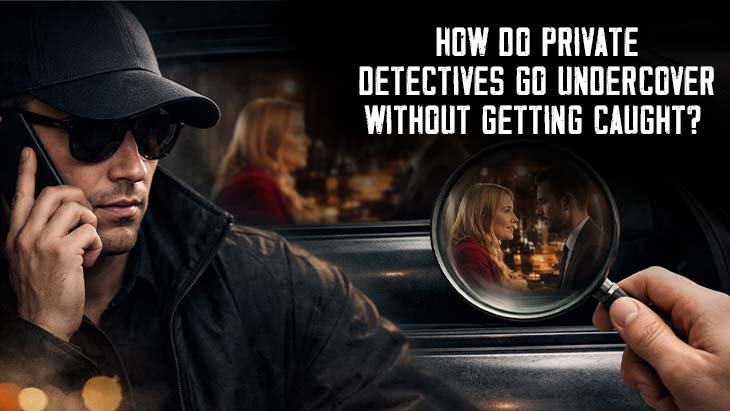
How do private detectives go undercover without getting caught?
Out of sight, a private detective might become someone else entirely – carefully shaped details make it stick. Watching closely comes before moving at all, each step timed like breath. Instead of standing out, they match the rhythm around them, fitting where they land without force. Preparation sets the stage, yet stillness often does more than action. A single odd gesture risks everything, so habits get rewritten until nothing feels forced. Ordinary moments shield unusual intent, if only because nobody looks twice.
How do private detectives create believable undercover identities?
Most times, a new face works better than a badge. Changing how they look lets officers blend into places where answers hide. They pick up local speech, copy daily patterns, act like they belong. Trust grows when someone seems familiar. Pretending comes down to small choices – how they walk, what they wear, when they show up. Details make lies feel real. Questions get answered easier if nobody doubts who you are.
Is an undercover investigation legal in India?
Undercover work can be allowed in India, so long as it follows local laws and basic ethics. While digging into cases, investigators need to stay clear of illegal acts – entering property without permission lands off limits. Posing as government officers? That is out of bounds too. Breaking privacy rules crosses the line just the same.
Can private detectives conduct undercover investigations in India?
Undercover work by private investigators happens in India – when it serves real needs like checking for fraud or spotting dishonest employees. These probes might dig into false insurance demands, also look at personal betrayals behind closed doors. As long as rules are followed, such operations stay within bounds. Laws must guide every move they make. No exceptions exist if the task leans toward secrecy. Each step requires care, not just permission.
What tools are used in undercover operations?
From time to time, the type of probe and local rules decide what gear gets used. Surveillance gadgets show up when needed. Paper trails matter, so cameras or recorders might start rolling. Secure chats slip through encrypted paths. Other approved tricks join in, depending on the situation. Info piles up piece by piece. Evidence takes shape quietly, without flash.
What challenges do detectives face in undercover work?
Hidden agents face dangers like being uncovered, sudden shifts in plans, stress on their emotions, yet keeping up a believable cover stays key. Getting things right usually comes down to how well they prepare, adjust when needed, plus stay sharp about small things.
When should I hire a private detective for an undercover investigation?
Hidden inquiries sometimes work best if cheating, stealing at work, lies on claims, or secret affairs stay hidden despite normal checks. Situations like these might call for someone trained to decide if going unseen makes sense. The right move? Let experience guide the choice – silently.